
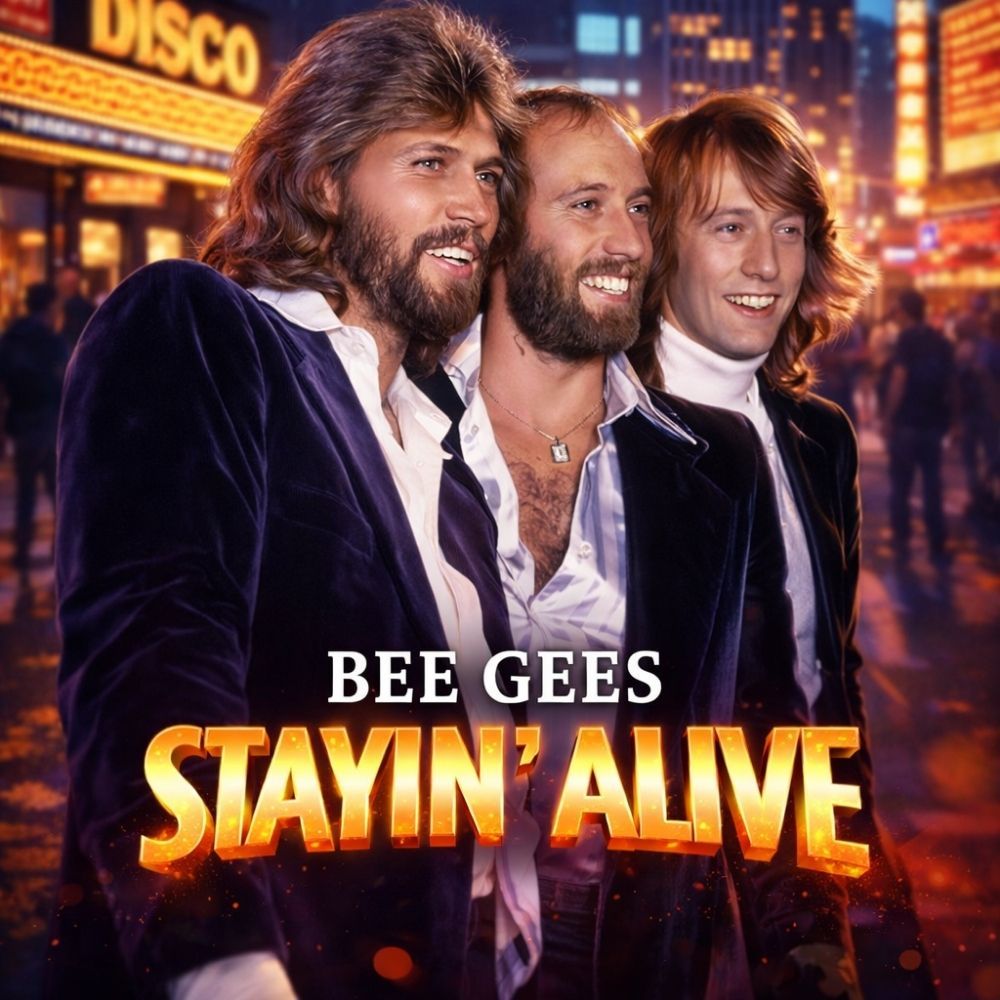
“Stayin’ Alive” — The Song That Defined an Era and Turned the Bee Gees Into Global Icons
Few songs in the history of popular music have achieved the cultural impact of Stayin’ Alive, the unforgettable recording by the Bee Gees that became a defining anthem of the late 1970s. Written and performed by Barry Gibb, Robin Gibb, and Maurice Gibb, the song captured a moment in musical history when rhythm, style, and culture merged in a way that changed the sound of popular music.
Released in 1977, the song was created for the soundtrack of the influential film Saturday Night Fever. At the time, the Bee Gees had already built a reputation for exceptional songwriting and vocal harmony, but this project would elevate their influence to an entirely new level. The film’s soundtrack—dominated by Bee Gees compositions—became one of the most successful albums ever released.
The opening of “Stayin’ Alive” is instantly recognizable. A steady rhythm begins with a crisp drum pattern and a driving bass line that immediately creates a sense of movement. Soon after, Barry Gibb’s famous falsetto enters, delivering the iconic first lines with a confidence that perfectly matches the song’s energetic pulse.
What makes the recording particularly remarkable is the way the Bee Gees combined multiple musical elements into a seamless sound. The rhythm section carries a powerful groove, while layered guitars, keyboards, and strings create a rich arrangement. Over this foundation, the three brothers’ harmonies provide a distinctive vocal identity that listeners can recognize within seconds.
Although the song became closely associated with the disco movement of the late 1970s, its meaning goes beyond the dance floor. The lyrics speak about perseverance, resilience, and the determination to keep moving forward despite life’s challenges. That theme helped the song resonate with listeners far beyond the nightclub culture often linked with the era.
Following its release, “Stayin’ Alive” quickly climbed to the top of the Billboard Hot 100 and became one of the Bee Gees’ most successful singles. Its influence extended beyond music charts into film, fashion, and popular culture. The song’s rhythm and style became symbols of the late 1970s, representing a time when music and dance formed a powerful cultural movement.
Over the decades, “Stayin’ Alive” has continued to appear in films, television shows, and live performances around the world. Its opening beat remains instantly recognizable to listeners of all ages, proving the extraordinary staying power of the Bee Gees’ songwriting.
The song also highlights the remarkable collaboration between the three Gibb brothers. Each brought unique strengths to the group: Barry’s songwriting leadership and falsetto voice, Robin’s emotional vocal tone, and Maurice’s musical versatility across multiple instruments. Together, they created a sound that was impossible to replicate.
Today, more than four decades after its release, “Stayin’ Alive” still carries the same vibrant energy that first captivated audiences. It reminds listeners of a time when music had the power to unite dance floors, radio stations, and entire generations through a single unforgettable rhythm.
And every time those opening beats begin again, the message of the song remains clear:
through rhythm, determination, and unforgettable harmony, the Bee Gees created a song that truly lives up to its title—still staying alive in the hearts of listeners everywhere.