
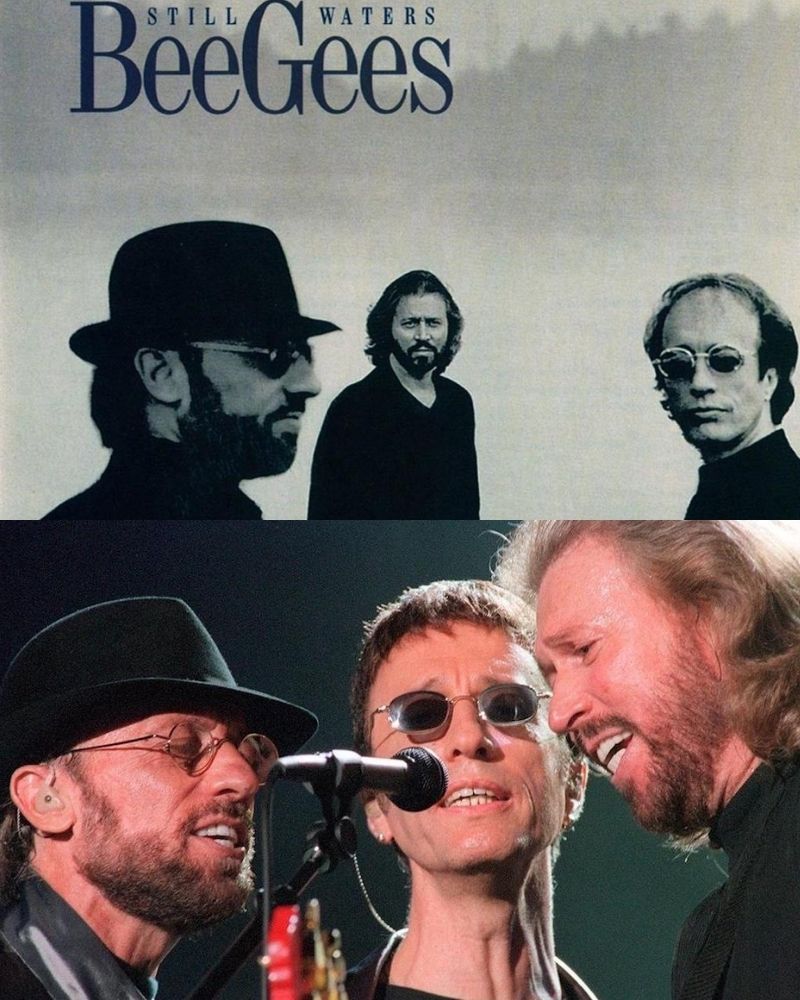
“Alone” — The Powerful Comeback Song That Proved the Bee Gees’ Legacy Was Far From Over
Among the later recordings by the Bee Gees, few songs captured the attention of audiences as strongly as Alone. Released in 1997, the song marked a remarkable moment in the group’s career, demonstrating that the musical chemistry between Barry Gibb, Robin Gibb, and Maurice Gibb remained as compelling as ever.
By the mid-1990s, many listeners associated the Bee Gees primarily with the monumental success of their earlier decades. Their influence on pop, rock, and disco had already shaped the sound of modern music. Yet “Alone” arrived as a powerful reminder that the trio’s creative spark had never faded.
The song was released as the lead single from the album Still Waters, a record that reintroduced the Bee Gees to a new generation of listeners. From the moment the opening notes begin, “Alone” carries a dramatic atmosphere. A strong guitar line and layered production create a sense of momentum before Robin Gibb’s distinctive voice delivers the unforgettable opening line.
Robin’s vocal tone—emotional, slightly fragile, yet filled with intensity—immediately captures attention. As the song builds, Barry Gibb’s harmonies and Maurice Gibb’s musical arrangement deepen the sound, creating the rich layered texture that had long defined the Bee Gees’ recordings.
Lyrically, the song explores themes of longing, distance, and the emotional struggle of feeling disconnected from someone important. The chorus expands into a powerful melody that feels both dramatic and deeply sincere. Many listeners have noted that the song carries a cinematic emotional quality, making it stand out among late-1990s pop releases.
When “Alone” was released, it quickly gained international success. The single climbed music charts across Europe and reached the top ten in several countries, including the United Kingdom. Its success confirmed that the Bee Gees’ songwriting and vocal harmonies still possessed a timeless ability to resonate with audiences.
The music video for the song also helped reinforce the dramatic mood. Featuring atmospheric visuals and close-up imagery of the three brothers performing, it highlighted the enduring connection between them. Even after decades of performing together, their presence as a trio still carried a unique authenticity.
For longtime fans, “Alone” represented more than just a successful single. It symbolized a remarkable comeback, proving that the Bee Gees were not simply icons of the past but artists capable of continuing their creative journey.
The recording also reminded listeners of something that had always set the group apart: their ability to combine emotional storytelling with unforgettable melodies. While musical trends changed constantly around them, the Bee Gees maintained a style rooted in harmony, lyrical sincerity, and strong songwriting.
Today, “Alone” remains one of the most memorable songs from the later period of the Bee Gees’ career. It stands as evidence that even after decades in the music world, the bond between Barry, Robin, and Maurice continued to produce music filled with emotional depth.
And when the chorus rises and the voices blend together once again, listeners are reminded of a simple truth:
the Bee Gees were never defined by a single era—their music continued to evolve, yet their harmony always remained unmistakable.