
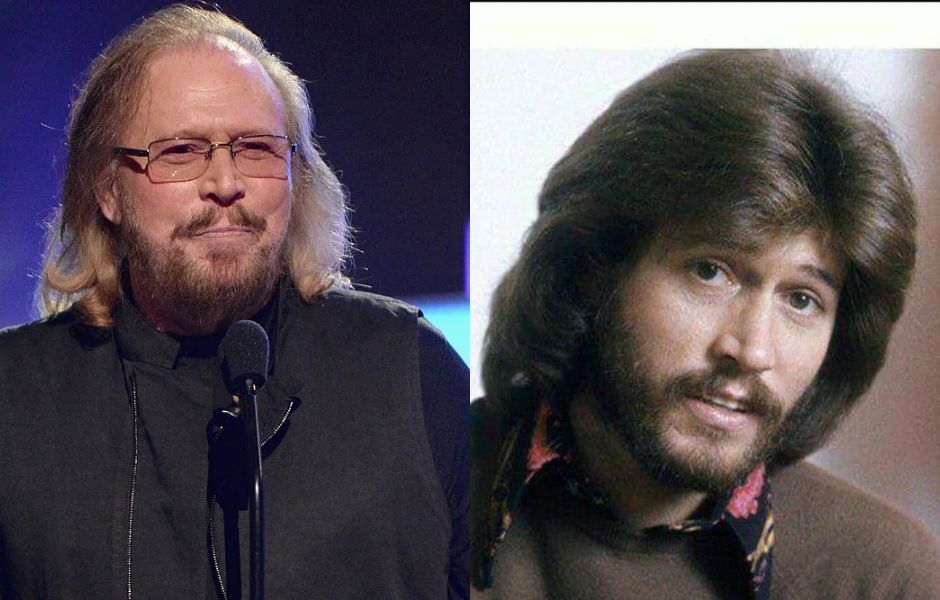
THE UNMATCHED GENIUS OF MELODY — Why Barry Gibb Continues to Stand as One of the Most Extraordinary Songwriters in Modern Music
For more than six decades, Barry Gibb has shaped the emotional landscape of popular music with a creative instinct that feels almost otherworldly. From his earliest days harmonizing with Robin Gibb and Maurice Gibb to his later years crafting deeply personal works as the last surviving Bee Gee, Barry’s ability to write melodies that settle instantly into the listener’s heart remains one of the great mysteries of modern music. Fans, producers, and fellow musicians continue to ask the same question: How does Barry Gibb create songs that feel as if they have always lived inside us?
Part of the answer lies in his remarkable sensitivity to emotion. Whether he was writing an uplifting ballad like “Too Much Heaven,” a soaring anthem like “Stayin’ Alive,” or an intimate confession such as “How Can You Mend a Broken Heart,” Barry always understood that melody is not simply sound — it is feeling. His songs do not just reach the ear; they settle into the soul. That connection is something few composers can achieve with such consistency. In every era, through every musical shift, Barry’s work has remained timeless because he writes from a place of sincerity rather than trend.
Another part of his genius comes from the extraordinary musical chemistry he shared with his brothers. The Bee Gees were more than a vocal group; they were three hearts beating in unison, each bringing a different emotional color that enriched their music. Barry’s melodies often acted as the guiding framework, while Robin added emotional complexity and Maurice contributed the warmth and structure that grounded every harmony. Even today, when Barry performs alone, listeners can still sense that invisible blend — the memory of three voices moving together like a single instrument.
His creative instinct also reveals a rare understanding of musical versatility. Few songwriters in history have successfully reinvented themselves across so many genres. Barry helped define soft pop in the late 1960s with songs like “Words” and “I’ve Gotta Get a Message to You.” Then, almost effortlessly, he became one of the architects of the disco era, crafting global phenomena such as “Night Fever” and “More Than a Woman.” And when the world seemed ready to move on from disco, Barry once again shifted gears, writing tender classics for artists like Barbra Streisand, Dionne Warwick, Kenny Rogers, and Dolly Parton — songs that became iconic in their own right.

What makes this versatility even more astonishing is the ease with which Barry moves from one emotional world to another. His melodies can be joyful, bittersweet, introspective, or triumphant — yet they always feel unmistakably his. Many artists spend years searching for a sound that defines them. Barry carried his naturally. His musical voice is so distinct that even a few seconds of one of his melodies can instantly identify him.
And still, the greater mystery remains: Why do his songs feel eternal? Why do they resonate with listeners across generations, cultures, and languages?
The simplest explanation may be this — Barry Gibb writes songs that speak to the universal truths of being human. Love, loss, hope, longing, resilience, and tenderness flow through his work with an honesty that makes listeners feel understood. His falsetto, often imitated but never duplicated, carries an emotional purity that seems to rise above time itself.
In recent years, as Barry reflects on a lifetime of music and memories, fans find themselves drawn even more deeply to the melodies that shaped their youth, their families, and their most treasured moments. His music has become a bridge between generations, a way for parents and children — and even grandchildren — to share something meaningful and enduring.
That may be Barry Gibb’s greatest gift of all: the ability to create melodies that outlive circumstances, eras, and even the people who first sang them. His work is not simply a catalog of hits; it is a living legacy, one that continues to grow each time a listener presses play and finds comfort, joy, or understanding in the notes he wrote so many years ago.
Fans still wonder how he does it. How one man can write songs that feel as if they were always meant to exist. Perhaps the truth is beautifully simple — Barry Gibb doesn’t write melodies for the moment. He writes melodies for the heart. And the heart, unlike the world around it, never goes out of style.