
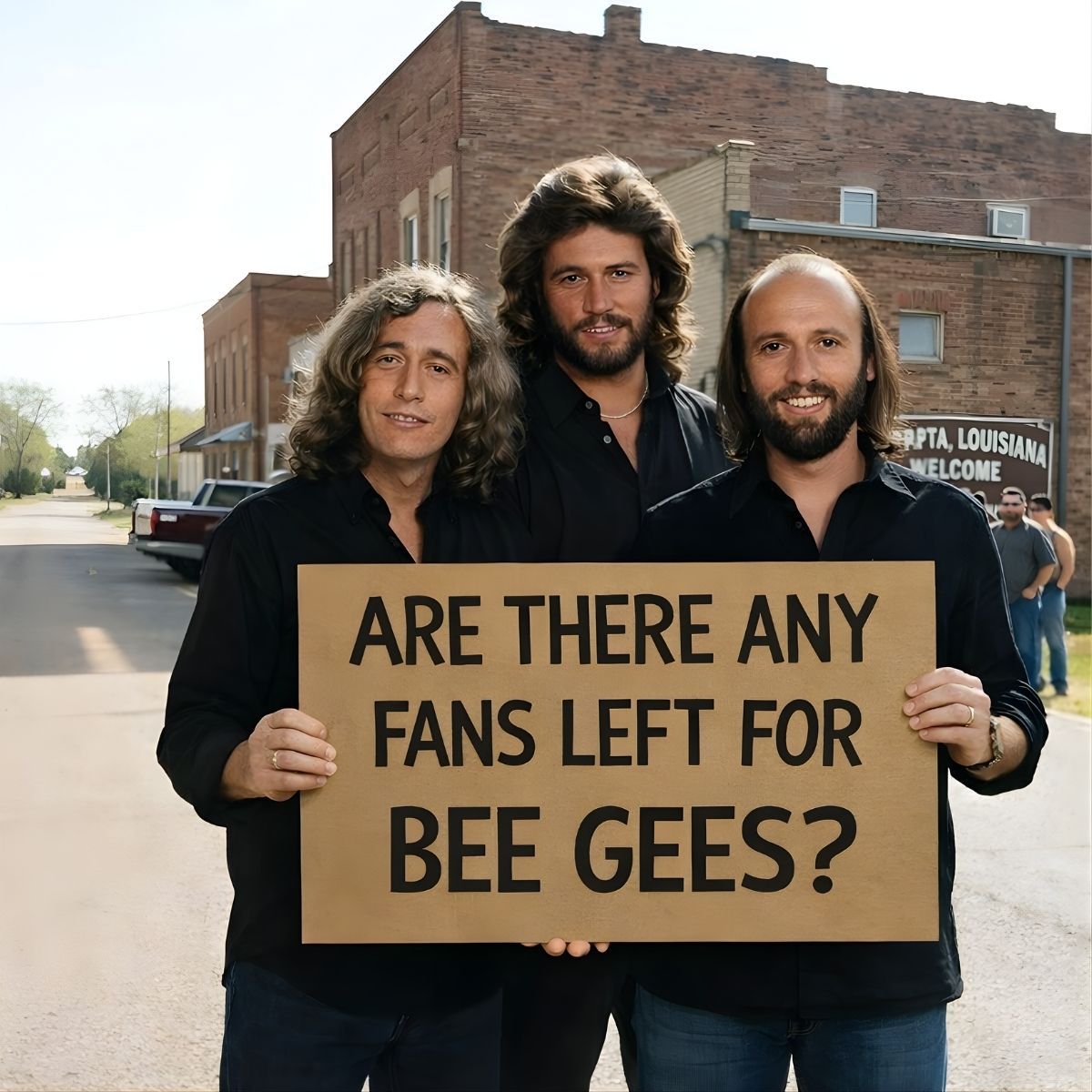
“DOES ANYONE STILL LISTEN TO THE BEE GEES?” — A QUIET QUESTION THAT ECHOES THROUGH A GENERATION’S HEART
At first glance, the question feels almost casual. “Does anyone still listen to the Bee Gees?” It does not arrive with fanfare or controversy. There is no dramatic declaration attached to it. Yet for many, especially those who grew up with their music woven into the fabric of daily life, the question lands with unexpected weight. It touches something tender—memory, identity, and the passage of time itself.
The Bee Gees were never just a band. For millions, they were companions through different stages of life. Their songs played on car radios during long drives, filled living rooms on quiet evenings, and danced through celebrations both small and grand. To ask whether anyone still listens to them is, in a subtle way, to ask whether those moments still matter.
The truth is, listening habits change. New voices emerge. New sounds define each generation. Yet some music does not age in the usual sense—it settles. It becomes part of the background of who we are. The Bee Gees belong firmly in that category. Their harmonies, instantly recognizable, carry an emotional clarity that transcends fashion. You do not need to know the year a song was released to feel what it expresses.
For older listeners, the Bee Gees are inseparable from personal history. Hearing “How Deep Is Your Love”, “To Love Somebody”, or “How Can You Mend a Broken Heart” can transport someone back decades in an instant. These are not just songs; they are emotional markers. They remind people of first loves, long marriages, friendships lost, and moments when life felt both simpler and more intense.
What makes the question quietly powerful is that it often comes from a place of humility rather than doubt. It sounds like someone looking back, aware that time has moved on, and wondering whether the things that once mattered so deeply still have a place in the present. That feeling is deeply familiar to many who have lived long enough to see their own youth become history.
Yet the answer, spoken or unspoken, is reassuring. Yes, people still listen. Perhaps not always loudly, not always publicly, but faithfully. The Bee Gees are discovered anew by younger listeners through films, family playlists, or late-night radio. At the same time, longtime fans return to the music not out of habit, but because it continues to speak honestly. Good songs do not demand attention; they wait patiently to be needed again.
There is also something profoundly human about revisiting music from earlier years. It offers continuity in a world that changes rapidly. When voices like Barry Gibb, Robin Gibb, and Maurice Gibb rise together in harmony, they remind listeners that emotion does not expire. Love, regret, hope, and reflection sound much the same across generations.
Importantly, listening does not always mean replaying records endlessly. Sometimes it means carrying a melody quietly within. It means recognizing a few notes in passing and feeling a familiar warmth. It means sharing a song with a grandchild and saying, “This mattered to me once,” without needing to explain why.
So when someone asks, “Does anyone still listen to the Bee Gees?”, the most honest answer may be this: people listen when they need to remember who they were, and who they still are. The Bee Gees are not confined to a particular era. They exist in the emotional landscape of those who lived with their music—and those who continue to find it.
In the end, the question is less about popularity and more about connection. Trends come and go. Charts fade. But songs that speak plainly and beautifully about the human experience never truly disappear. They wait. And when life grows quiet enough, people still listen.