
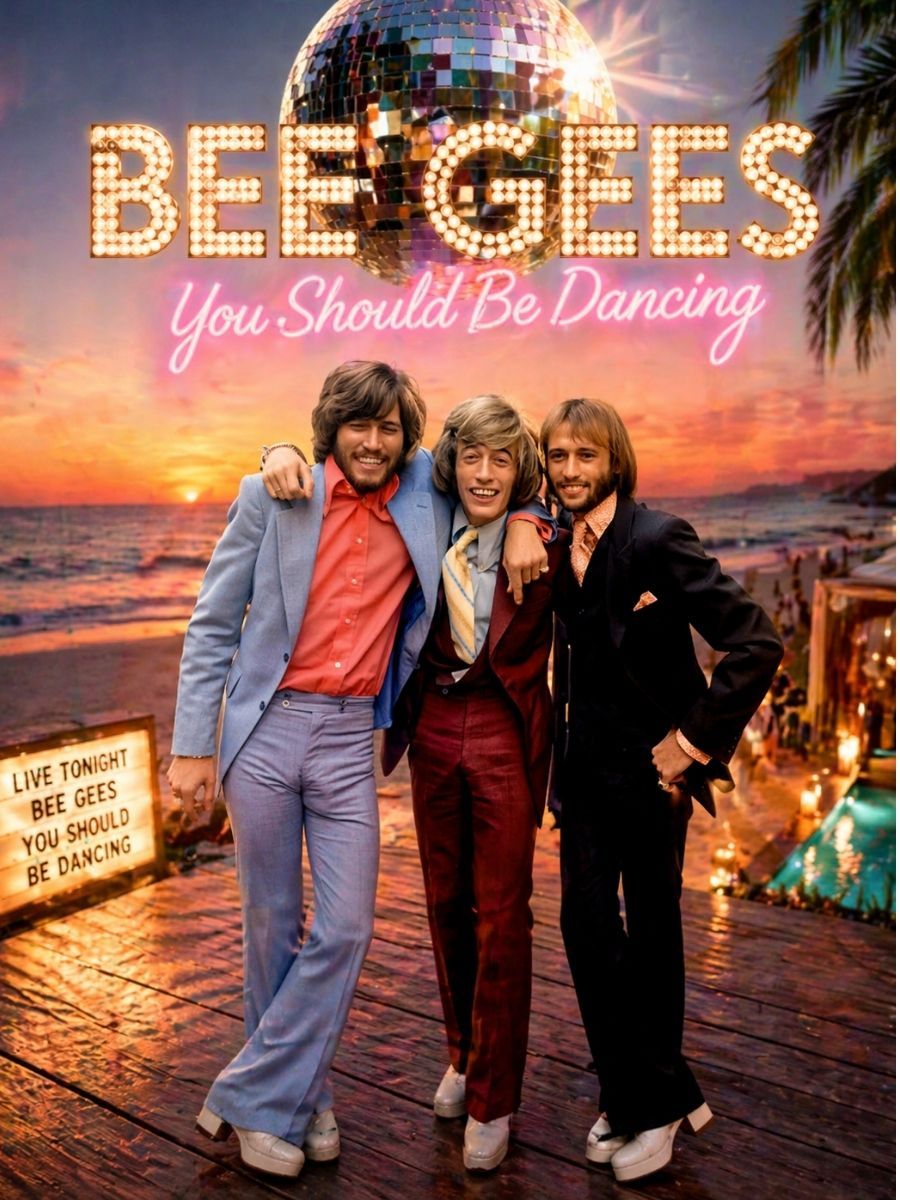
“You Should Be Dancing” — The Bee Gees’ Electrifying Anthem That Set the World Moving
Among the many unforgettable songs recorded by the Bee Gees, the energetic disco classic You Should Be Dancing stands as one of the most powerful musical statements of the 1970s. Written by the Gibb brothers—Barry Gibb, Robin Gibb, and Maurice Gibb—the song captured the vibrant energy of an era when dance music was transforming popular culture around the world.
Released in 1976 on the album Children of the World, the track marked an important turning point in the Bee Gees’ musical evolution. Earlier in their career, the group had become famous for emotional ballads and melodic pop songs. But during the mid-1970s, they began experimenting with rhythm-driven arrangements that blended soul, funk, and emerging disco influences.
“You Should Be Dancing” became one of the first songs where this new direction was fully realized. The track opens with a powerful rhythmic groove that immediately grabs the listener’s attention. A deep bass line, combined with crisp percussion and rhythmic guitar accents, establishes a pulse that feels almost impossible to resist.
Soon after the rhythm begins, Barry Gibb’s unmistakable falsetto voice enters with electrifying confidence. His soaring vocal style became one of the defining sounds of the Bee Gees’ disco era. In this song, the falsetto does more than carry the melody—it becomes part of the rhythm itself, moving effortlessly through the music.
Behind the lead vocal, Robin and Maurice Gibb add the harmonies that had always defined the Bee Gees’ musical identity. Their voices blend naturally with Barry’s, creating a layered sound that gives the song both energy and depth.
Musically, the arrangement is rich with rhythmic detail. Percussion instruments such as congas and shakers add texture, while guitars and keyboard accents create flashes of brightness within the groove. Each musical element contributes to a sound that feels vibrant, polished, and full of movement.
The lyrics themselves are simple yet effective. Rather than telling a detailed story, the song captures the excitement of nightlife and the irresistible pull of music. The message is straightforward: when the rhythm begins, standing still is no longer an option.
When the single was released, it quickly climbed to the number one position on the Billboard Hot 100, becoming one of the Bee Gees’ biggest hits. The success of the song confirmed that the group had successfully reinvented their sound.
The track later gained even greater recognition when it appeared in the influential film Saturday Night Fever, which captured the vibrant nightlife culture of the late 1970s. The Bee Gees’ music became the heartbeat of the film, and songs like “You Should Be Dancing” helped shape the identity of the disco era.
Live performances of the song often became some of the most exciting moments in Bee Gees concerts. The driving rhythm and soaring vocals transformed arenas into energetic celebrations where audiences moved together with the music.
Even decades later, the song continues to appear in films, television programs, and retrospectives celebrating the golden age of disco. Its rhythm remains instantly recognizable, and its energy still feels fresh to new generations of listeners.
More than just a dance track, “You Should Be Dancing” represents a moment when the Bee Gees boldly reshaped their musical identity and helped define the sound of an entire era.
And every time the famous groove begins again, the message still feels irresistible:
when music fills the air and the rhythm takes hold, the world itself becomes a dance floor.