
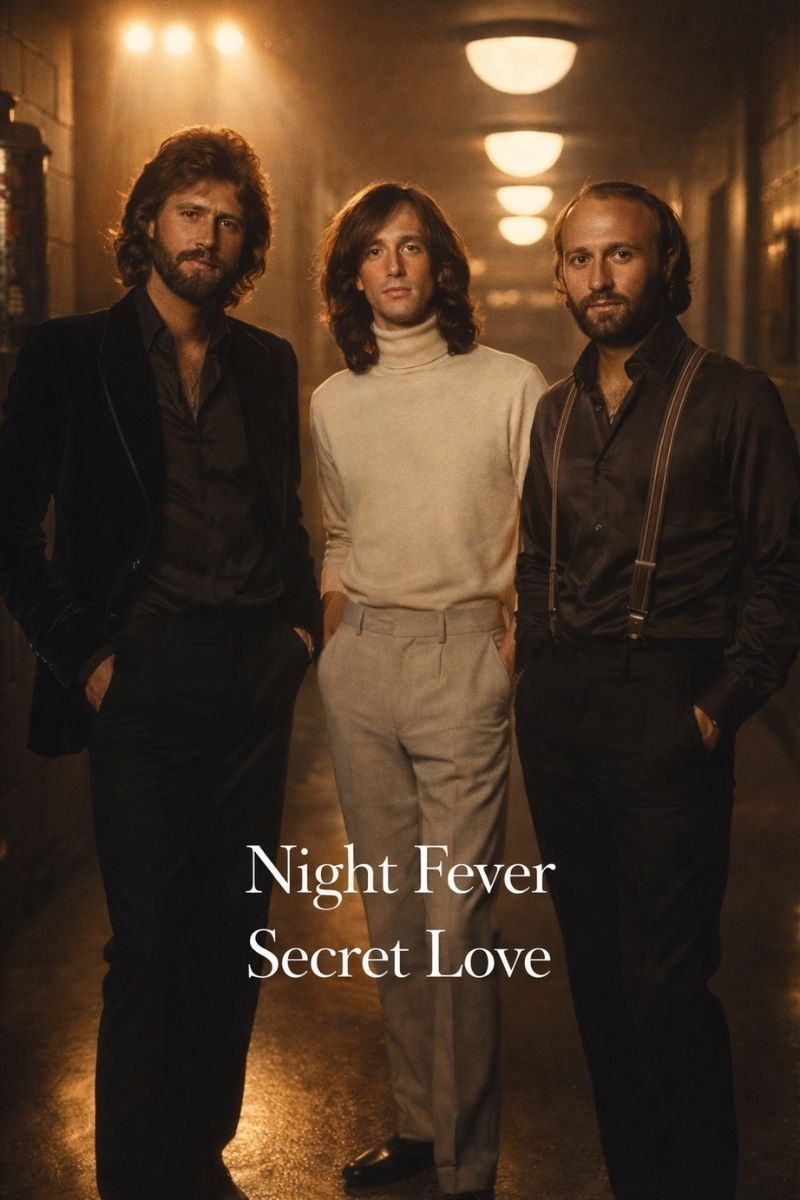
“Night Fever” — The Bee Gees Classic That Captured the Pulse of an Entire Generation
Few songs embody the atmosphere of the late 1970s as completely as Night Fever, one of the most iconic recordings by the Bee Gees. Written by the Gibb brothers—Barry Gibb, Robin Gibb, and Maurice Gibb—the song became a defining piece of the disco era and a cornerstone of their extraordinary musical legacy.
Released in 1977 as part of the groundbreaking soundtrack to the film Saturday Night Fever, “Night Fever” emerged during a period when the Bee Gees were reshaping the sound of popular music. The soundtrack itself would go on to become one of the best-selling albums of all time, and “Night Fever” stood at the very center of that success.
The song begins with a smooth and hypnotic groove. A steady rhythm, driven by bass and percussion, creates an atmosphere that feels both relaxed and irresistibly danceable. Layered guitars and subtle keyboard accents add texture, building a sound that is rich yet controlled.
When Barry Gibb’s unmistakable falsetto enters, the identity of the song becomes instantly clear. His vocal delivery is confident and fluid, gliding effortlessly over the rhythm. Unlike some of the more intense recordings of the era, “Night Fever” carries a sense of cool sophistication, inviting listeners into its world rather than overwhelming them.
Robin and Maurice Gibb add their harmonies with precision, enhancing the melody without disrupting its smooth flow. This balance between lead vocal and harmony is one of the key reasons the Bee Gees’ sound remains so distinctive.
Lyrically, the song reflects the mood of nightlife—movement, rhythm, and the desire to lose oneself in music. Rather than focusing on a specific story, the lyrics capture a feeling, allowing listeners to interpret the experience in their own way. This open-ended quality helped the song connect with a wide audience.
Upon its release as a single, “Night Fever” achieved remarkable success. It reached the number one position on the Billboard Hot 100, where it remained for an extended period. The song became one of the Bee Gees’ most successful hits and a defining track of their career.
Its association with Saturday Night Fever further amplified its cultural impact. The film’s dance sequences, combined with the Bee Gees’ music, created an image of the disco era that continues to influence how that period is remembered.
Live performances of “Night Fever” often brought a unique energy to Bee Gees concerts. The steady groove and recognizable melody encouraged audiences to move with the music, turning performances into shared moments of rhythm and celebration.
Even decades later, the song continues to appear in films, television programs, and retrospectives celebrating the music of the 1970s. Its smooth rhythm and timeless melody ensure that it remains relevant to new generations of listeners.
More than just a hit song, “Night Fever” represents a moment when music, culture, and emotion came together in perfect harmony. It reflects the Bee Gees’ ability to create songs that are not only memorable but deeply connected to the spirit of their time.
And as the rhythm flows once more, the message feels as clear today as it did then:
when melody, harmony, and rhythm align, music becomes more than sound—it becomes an experience that lives on across generations.