
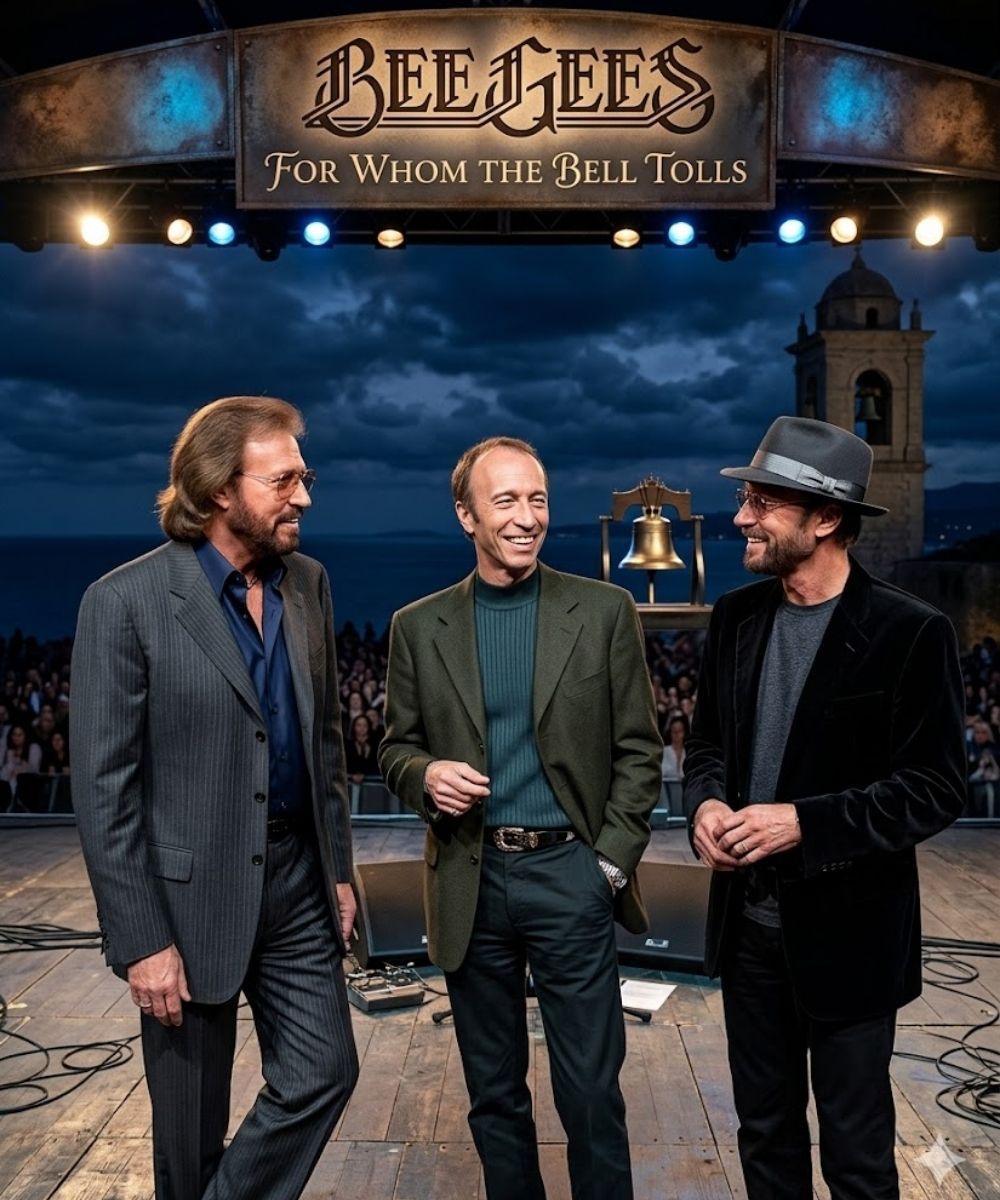
“For Whom the Bell Tolls” — The Bee Gees Ballad That Echoes with Quiet Power and Reflection
Among the later works of the Bee Gees, the song For Whom the Bell Tolls stands as one of their most emotionally restrained and reflective recordings. Written by Barry Gibb, Robin Gibb, and Maurice Gibb, the song reveals a mature perspective on love, distance, and the quiet moments when understanding comes too late.
Released in 1993 as part of the album Size Isn’t Everything, the track arrived during a period when the Bee Gees were exploring a more subtle and introspective musical direction. Rather than relying on grand production or dramatic effects, the song is built on atmosphere, emotion, and lyrical depth.
The opening creates a mood that is almost cinematic in its stillness. Soft instrumentation—gentle keyboards, restrained percussion, and delicate guitar—forms a quiet foundation over which the vocals can unfold. There is a sense of space in the arrangement, allowing every note and every word to be clearly felt.
Barry Gibb’s lead vocal carries the emotional weight of the song. His delivery is controlled and thoughtful, avoiding excess while conveying a deep sense of reflection. There is no urgency in his voice—only a calm awareness, as though the story being told has already reached its conclusion.
As the song progresses, the harmonies of Robin and Maurice enter with subtle precision. Their voices do not dominate the arrangement but instead blend seamlessly, adding layers of emotional texture. This understated use of harmony highlights one of the Bee Gees’ greatest strengths: their ability to communicate complex feelings through the simplest musical choices.
The lyrics of “For Whom the Bell Tolls” explore the realization that something meaningful has been lost. The song reflects on a relationship that has drifted beyond recovery, capturing the quiet moment when one understands the consequences of distance and silence. Rather than expressing regret with intensity, the song presents it with calm clarity, making the message even more powerful.
When released as a single, the song achieved notable success in several countries, including a strong showing on the UK Singles Chart. Its reception demonstrated that audiences continued to appreciate the Bee Gees’ ability to evolve while maintaining their emotional authenticity.
For many listeners, this song represents a more mature phase of the Bee Gees’ artistry. It moves away from the energetic rhythms of their earlier hits and instead focuses on reflection, understanding, and emotional honesty. It is a reminder that their music was never limited to one style or era.
Live performances of the song further emphasized its emotional depth. Without elaborate staging, the focus remained entirely on the voices and the message, creating moments of quiet connection between the performers and the audience.
Decades later, “For Whom the Bell Tolls” continues to resonate with those who appreciate music that speaks softly yet profoundly. It stands as a testament to the Bee Gees’ enduring ability to capture the complexities of human experience through melody and harmony.
And as the final notes fade into silence, the song leaves behind a lasting reflection:
sometimes the most powerful realizations come not in moments of noise, but in the quiet echo of what has already passed.