
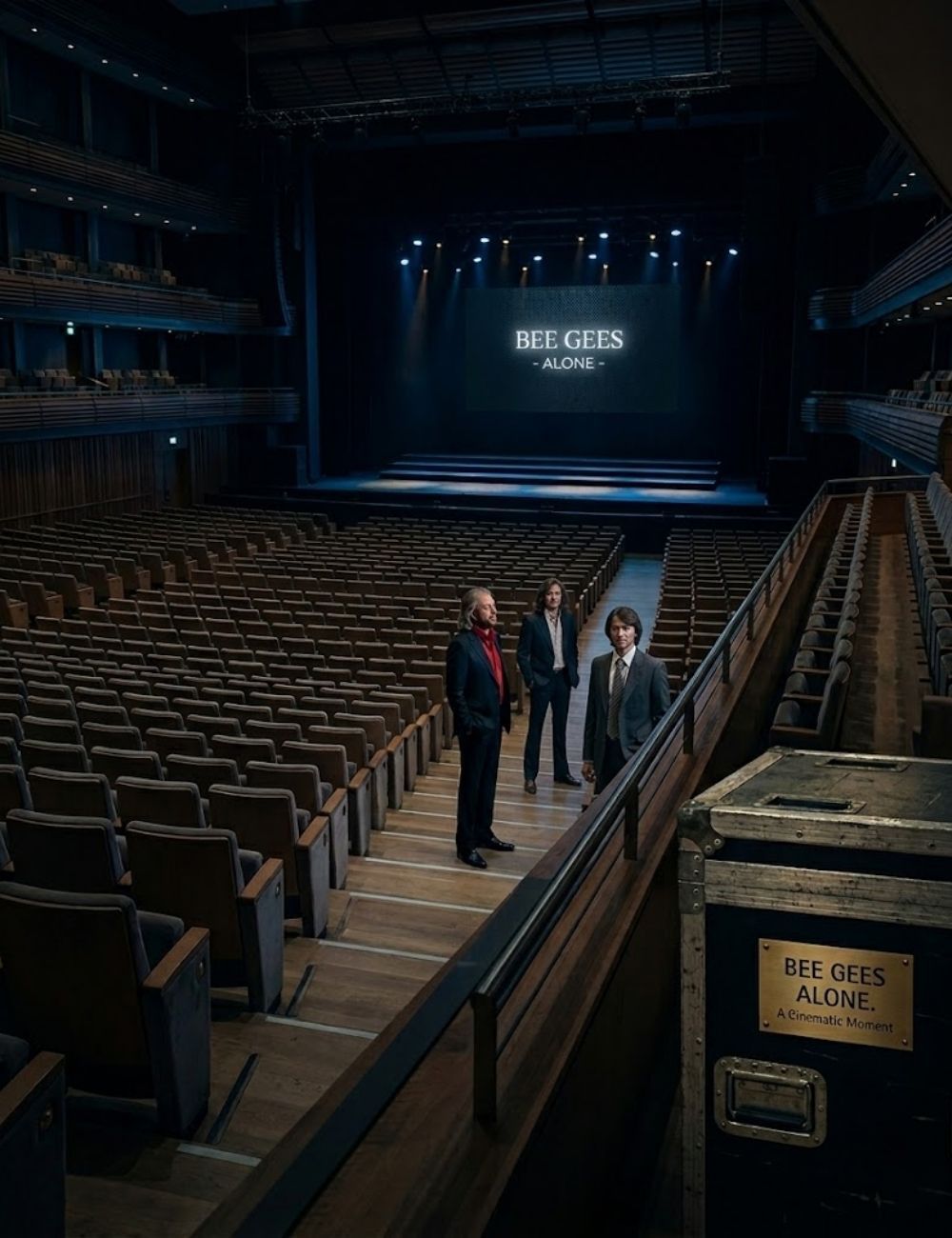
WHEN SILENCE SPEAKS THE LOUDEST — THE REFLECTIVE DEPTH AND TIMELESS EMOTION OF “ALONE”
Some songs capture the spirit of celebration and movement, while others turn inward, exploring the quiet spaces where reflection and memory live. “Alone” by the Bee Gees, released in 1997, belongs to the latter category. It is a song shaped by maturity, introspection, and the profound understanding that even in a life filled with music, there are moments when solitude reveals truths that words rarely express. Through its haunting melody and thoughtful lyrics, the recording becomes a meditation on distance, resilience, and the search for connection in a changing world.
By the time this song appeared, Barry Gibb, Robin Gibb, and Maurice Gibb had already traveled through decades of musical evolution. Few artists had experienced such a long and influential journey. From their early melodic ballads in the 1960s to the rhythmic innovations of the late 1970s, the Bee Gees had continually reinvented their sound while maintaining the unmistakable harmony that defined their identity. “Alone” reflects a later chapter in that journey—a moment where experience, reflection, and emotional depth merge into a powerful musical statement.
The song begins with a sense of quiet atmosphere. Soft instrumental textures slowly emerge, creating a soundscape that feels expansive yet restrained. The rhythm moves steadily beneath the surface, while shimmering keyboard tones provide a subtle emotional glow. This careful arrangement allows the melody to unfold gradually, drawing the listener into a contemplative mood.
When the vocal line enters, the emotional core of the song becomes clear. Barry Gibb’s voice carries the melody with warmth and sincerity, blending strength with vulnerability in a way that feels deeply authentic. His distinctive vocal tone—refined by decades of performance—adds a sense of gravitas to the words. Rather than dramatizing the emotion, the delivery feels reflective, as though the singer is sharing a realization shaped by years of experience.
At the heart of the composition lies the concept expressed in its title: being alone. Yet the song does not present solitude simply as isolation or loss. Instead, it explores the complicated relationship between independence and connection. There are moments in life when the world seems vast and distant, when familiar voices fade into silence and one must navigate the journey forward alone. The song acknowledges that reality while also suggesting that resilience can grow from those moments of solitude.
Musically, the composition carries a modern polish that reflects the evolving sound of the late 1990s. Smooth production techniques, atmospheric instrumentation, and rhythmic precision create a contemporary sonic landscape. Yet despite these modern textures, the essence of the Bee Gees’ songwriting remains unchanged. Melody and harmony continue to guide the emotional direction of the song, ensuring that its message remains clear and heartfelt.
The harmonies themselves are one of the recording’s most striking features. Throughout their extraordinary career, the voices of Barry, Robin, and Maurice created a sound that few vocal groups could match. In “Alone,” those harmonies appear with refined subtlety. Rather than dominating the arrangement, they weave gently around the melody, adding depth and resonance without overwhelming the central vocal line. The result is a sound that feels both intimate and expansive at the same time.
Another remarkable aspect of the song is its sense of emotional maturity. Earlier recordings by the Bee Gees often explored themes of longing, devotion, and romantic reflection. In contrast, “Alone” carries a broader perspective. The lyrics suggest an awareness of life’s complexities—the recognition that experiences accumulate over time, shaping how individuals understand themselves and the world around them. This reflective quality gives the song a depth that resonates strongly with listeners who appreciate thoughtful songwriting.
Over the years, “Alone” has become one of the most significant recordings from the Bee Gees’ later career. It demonstrated that even after decades of success, the trio continued to evolve artistically. Rather than repeating earlier formulas, they embraced new musical textures while remaining faithful to the melodic instincts that had defined their work from the beginning.
Listening to the song today reveals its remarkable ability to connect across generations. The production may reflect the late twentieth century, yet the emotional message remains timeless. Everyone experiences moments of solitude—times when the world feels quieter and reflection becomes unavoidable. “Alone” captures that experience with honesty and grace, offering a musical companion for those thoughtful moments.
Ultimately, the enduring power of the song lies in its sincerity. The Bee Gees did not approach the theme with dramatic intensity or exaggerated sentiment. Instead, they allowed the melody and lyrics to unfold naturally, trusting that the quiet truth within the music would resonate with listeners.
And decades later, when the first notes begin and the familiar voices return, the song continues to carry its gentle message forward. Through thoughtful melody, warm harmony, and reflective lyricism, “Alone” reminds us that solitude is not always emptiness—sometimes it is the moment when the heart listens most clearly to its own voice.