
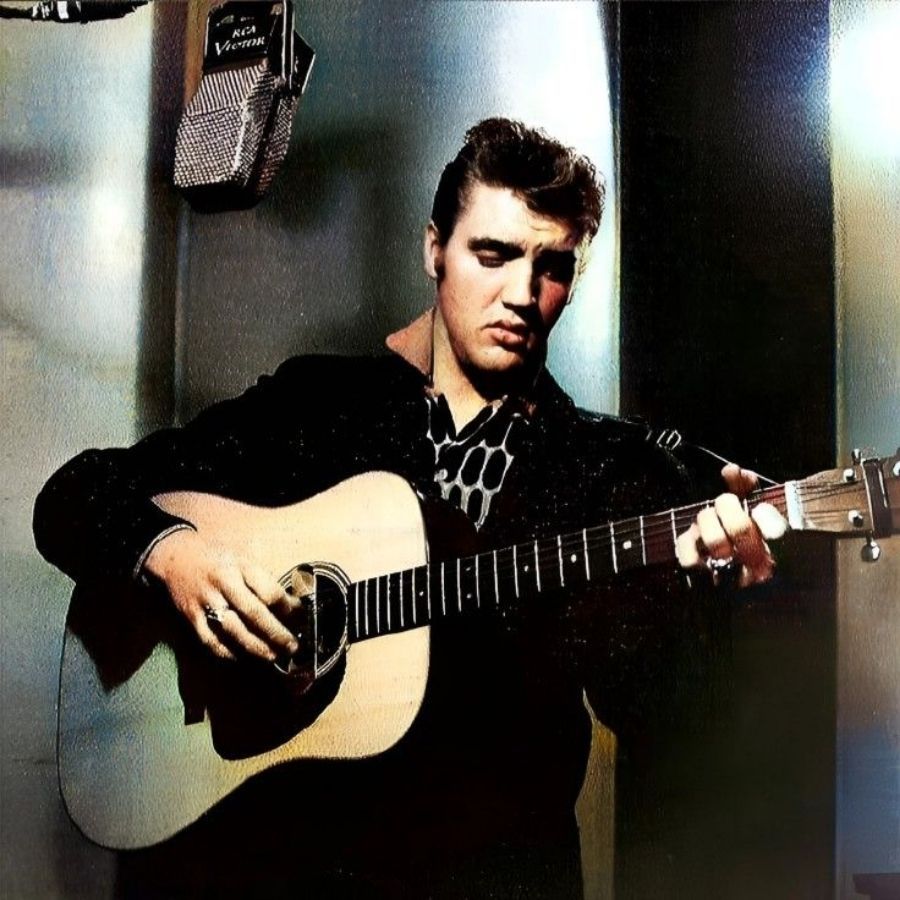
A MOMENT BEFORE THE WORLD KNEW HIS NAME — IN AUGUST 1953, ELVIS PRESLEY STEPPED INTO SUN RECORDS TO RECORD TWO SIMPLE ACETATES, CREATING A QUIET MEMORY THAT TIME WOULD LATER CALL THE BEGINNING OF EVERYTHING
In August 1953, there were no crowds waiting outside. No cameras. No sense of occasion. The Memphis heat hung heavy in the air, and the street outside Sun Records looked like any other on an ordinary afternoon. Nothing about that day suggested history was about to shift.
And yet, that was the day Elvis Presley walked through the door.
He was young then. Unknown. Soft-spoken. Not a star — not even an aspiring one by most standards. Elvis didn’t arrive chasing fame or dreaming of revolution. He came for a simple reason: to record two songs onto acetate records. A keepsake. A personal memory. Something modest, almost private.
Inside the studio, the space was small and functional. No grand equipment. No polished sound. Just a microphone, a recording machine, and a young man standing quietly, unsure of where to place his hands. He chose two songs that spoke gently rather than boldly: My Happiness and That’s When Your Heartaches Begin.
They were not songs meant to impress. They were songs meant to feel.
When Elvis began to sing, his voice carried a softness that felt almost fragile. There was no showmanship, no performance instinct yet sharpened by stages and spotlights. What came through the speaker was sincerity — a young voice shaped by gospel hymns, country radio, and long hours listening alone. His phrasing lingered. His tone wavered slightly. And in that imperfection lived something rare.
He was not trying to sound like anyone else.
He was simply being himself — without knowing how powerful that could be.
Those acetates were not released. They were not played on the radio. They did not make headlines. They sat quietly, holding a moment that would only later be understood. But within those grooves lived the earliest trace of a sound the world had never quite heard before — a blending of tenderness and depth, restraint and longing.
Elvis left the studio that day exactly as he had entered it: unknown. The world did not stop. Music did not change overnight. But something had been set in motion.
Sun Records would soon become a place where raw emotion mattered more than polish, where voices were allowed to be human. And Elvis Presley would return — older, bolder, and eventually unforgettable. But that future was still hidden on that August afternoon.
There was no crown that day.
No title.
No legend.
There was only a young man, standing alone in a small room, singing two simple songs into a microphone — unaware that time would later look back and say: this was the beginning of everything.
History often announces itself loudly.
But sometimes, it arrives quietly — wrapped in sincerity, captured on acetate, and waiting patiently for the world to catch up.