
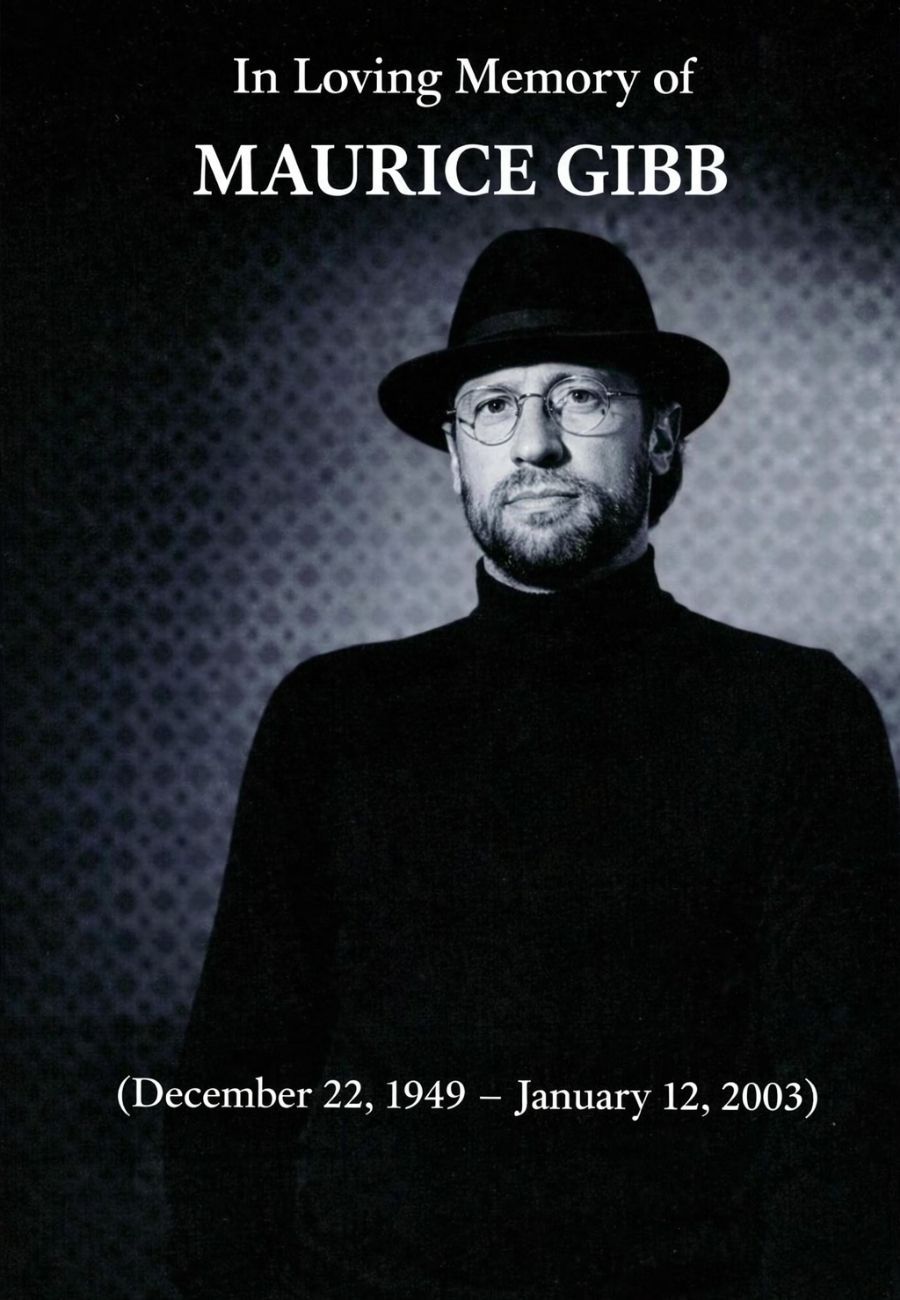
More Than a Voice, More Than a Musician — A Nostalgic Look Back at Maurice Gibb, the Heartbeat of a Family and a Band
There are artists whose greatness is measured by how loudly they are remembered, and then there are those whose importance is felt in the quiet moments — in what holds everything together. Maurice Gibb belonged to the latter. He was more than a voice, more than a musician. He was the heartbeat of a family, and the steady pulse behind the enduring sound of the Bee Gees.
Maurice was never driven by the need to stand in front. His gift lay in balance. While the world often focused on melodies and falsettos, Maurice was listening to everything else — the spaces between notes, the weight of a bass line, the way one harmony needed another to feel complete. He understood music as a living structure, not a spotlight.
As a multi-instrumentalist, his contributions were vast and often understated. Bass guitar, keyboards, rhythm guitar — Maurice moved effortlessly between roles, shaping songs from the inside out. His arrangements gave the Bee Gees their foundation. When the music felt whole, grounded, and emotionally steady, his influence was usually there, quietly doing its work.
But Maurice’s true legacy reaches beyond sound.
Within the family, he was the connector. The one who eased tension before it hardened. The one who listened when others spoke, and spoke when others could not. In moments of disagreement, he leaned toward unity. In moments of success, he never lost perspective. He carried responsibility with humility and loyalty with instinct.
Those who knew him best often spoke of his kindness — not performative, not conditional, but natural. Maurice had a way of making people feel included, understood, and safe. His humor was gentle. His presence reassuring. Fame never changed the way he related to the people around him.
When Maurice passed, the loss was immediate and deeply felt. Not just because a talented musician was gone, but because the center had shifted. A harmony was missing. The music still existed, but something essential had changed. The Bee Gees were no longer just fewer in number — they were different in spirit.
And yet, Maurice remains everywhere.
He is there in the way the harmonies settle just right. In the way the rhythm carries emotion without overpowering it. In the sense of togetherness that defines the Bee Gees’ music long after the voices have fallen silent. His influence does not announce itself. It supports. It steadies. It lasts.
Looking back now, Maurice Gibb’s greatness feels even clearer. He showed that leadership does not require volume. That genius can be gentle. That the most important role in any family — or any band — is often the one that keeps everyone moving in the same direction.
More than a voice.
More than a musician.
Maurice Gibb was the heartbeat — and that rhythm still lives on, quietly, in every song that continues to bring people together.