
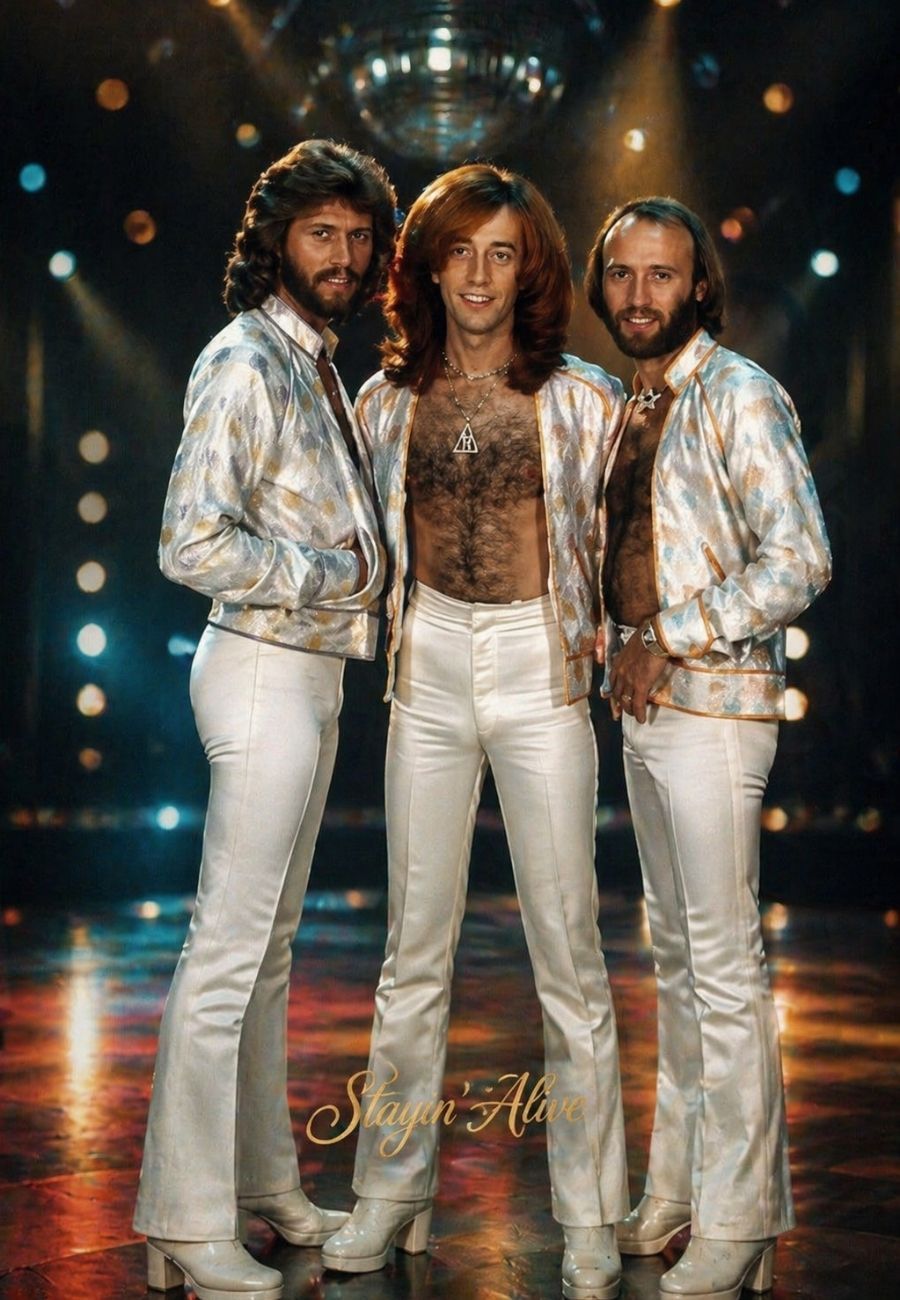
THE BEAT THAT REFUSED TO FADE — HOW “STAYIN’ ALIVE” BECAME A SYMBOL OF RESILIENCE, RHYTHM, AND MUSICAL IMMORTALITY
Some songs arrive quietly and fade with the passing of time. Others emerge with such force that they reshape the musical landscape and remain etched into cultural memory for generations. “Stayin’ Alive” by the Bee Gees belongs unmistakably to the second category. More than a popular recording from a vibrant musical era, it stands as a powerful statement of determination, rhythm, and the unstoppable pulse of life itself.
When Barry Gibb, Robin Gibb, and Maurice Gibb created this remarkable piece of music, they were already accomplished songwriters with years of success behind them. Yet few could have predicted that this particular song would become one of the most recognizable recordings in modern music history. With its unforgettable groove, striking falsetto vocals, and hypnotic rhythm, “Stayin’ Alive” captured the spirit of a generation while also delivering a message that would resonate far beyond its time.
From the very first moment, the song announces its presence with unmistakable confidence. A steady beat begins to pulse like a heartbeat—precise, relentless, and impossible to ignore. The rhythm carries a sense of motion, as though the music itself is walking forward with unwavering purpose. Layer by layer, the arrangement builds: guitar accents shimmer, bass lines glide smoothly beneath the surface, and percussion adds a sharp clarity that propels the entire composition.
Then comes the voice that defines the recording. Barry Gibb’s soaring falsetto rises above the rhythm with electrifying energy, delivering the melody in a style that became one of the most iconic vocal signatures of the era. The vocal performance feels both urgent and controlled, capturing the spirit of perseverance suggested by the song’s central phrase.
At its heart, “Stayin’ Alive” expresses a message of resilience. The lyrics reflect the determination to continue moving forward despite adversity, uncertainty, or pressure. While the rhythm encourages movement and celebration, the words hint at the realities of life’s challenges. This contrast gives the song a fascinating emotional complexity: the music invites the body to move, while the message reminds the listener of the strength required simply to endure and continue.
The brilliance of the Bee Gees lies in how seamlessly they combined these elements. Many dance-oriented recordings rely primarily on rhythm and atmosphere. Yet this song achieves something more profound. It transforms a dance groove into a declaration of perseverance, turning a simple phrase into an enduring symbol of determination.
Another essential element of the track is the extraordinary harmony that defines the Bee Gees’ sound. The voices of Barry, Robin, and Maurice blend together with remarkable precision, creating a texture that feels both vibrant and cohesive. Their harmonies do not merely support the melody; they expand it, adding depth and richness that elevate the entire arrangement.
The song’s impact was further amplified by the cultural moment in which it appeared. The late 1970s witnessed the rise of a musical movement centered on rhythm, dance, and communal energy. Within that environment, “Stayin’ Alive” emerged as a defining anthem, echoing across dance floors, radio stations, and gatherings where music became the heartbeat of social life.
Yet what truly sets the recording apart is its ability to transcend the era that first celebrated it. Many songs closely tied to specific musical movements eventually become nostalgic relics. “Stayin’ Alive,” however, continues to feel remarkably vibrant. Its rhythm remains instantly recognizable, its melody unforgettable, and its message universally understood.
Over time, the song has taken on new layers of meaning. For some listeners, it evokes memories of a dynamic musical period filled with energy and optimism. For others, it represents something more personal: the quiet determination to continue moving forward despite life’s inevitable obstacles. In this way, the song has evolved from a dance-floor anthem into something almost symbolic.
Musically, the recording remains a masterclass in balance and precision. Every instrument serves a purpose, every rhythmic accent appears exactly where it belongs, and the entire arrangement flows with effortless momentum. The Bee Gees demonstrated an extraordinary understanding of how rhythm and melody can work together to create something both immediate and timeless.
Listening to “Stayin’ Alive” today still produces the same instinctive response it did decades ago. The beat begins, the falsetto enters, and suddenly the music feels alive again—vibrant, confident, and filled with motion. It is a reminder that some songs possess a rare vitality that cannot be diminished by time.
Ultimately, the enduring legacy of “Stayin’ Alive” lies in more than its chart success or cultural influence. Its true significance comes from the feeling it continues to inspire. Through rhythm, harmony, and unforgettable melody, the Bee Gees created a recording that speaks to something fundamental within the human experience.
Because at its core, the song expresses a simple yet powerful truth: life moves forward, the rhythm continues, and sometimes the greatest triumph is simply the determination to keep going—step by step, beat by beat, stayin’ alive.