
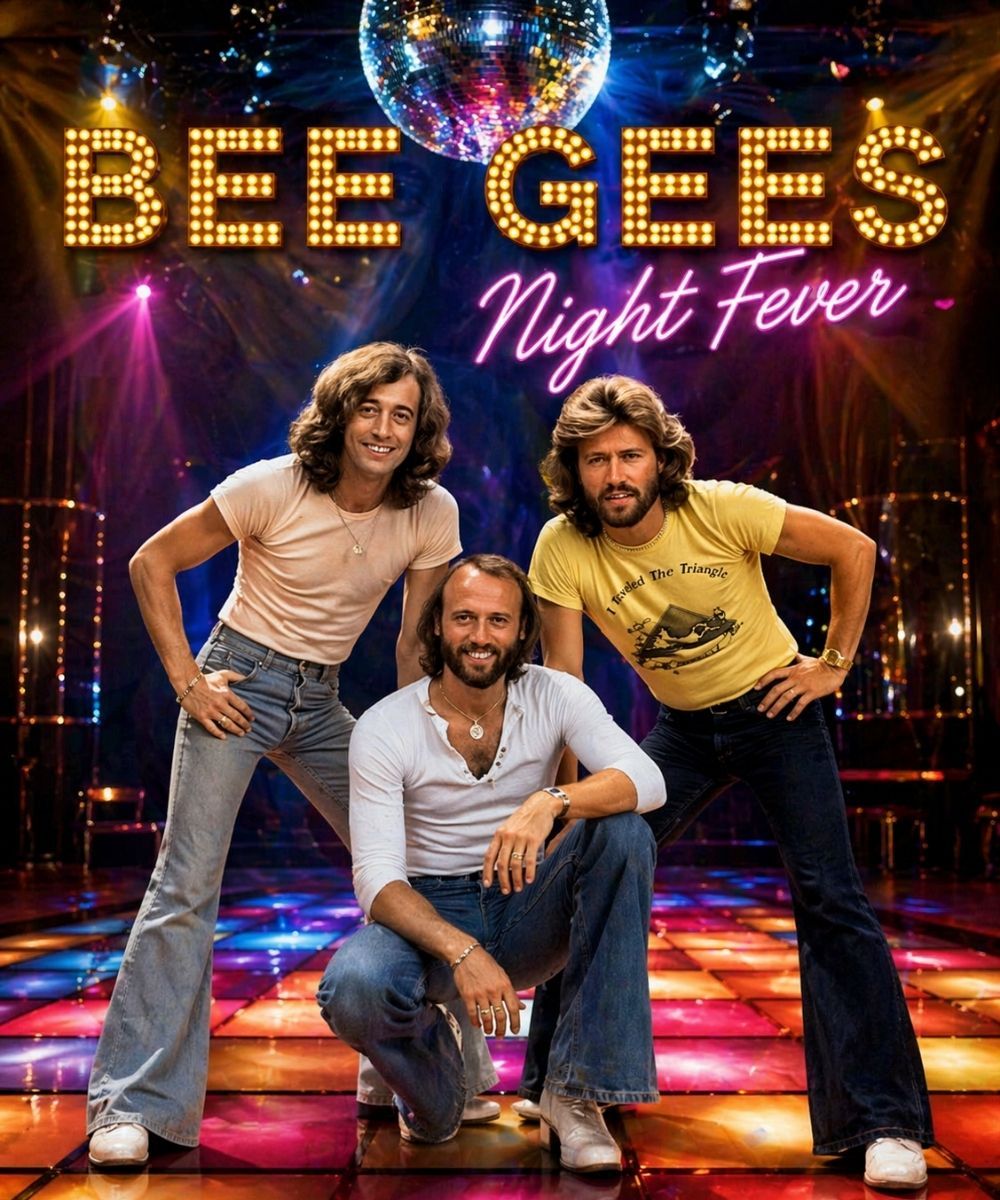
“Night Fever” — The Bee Gees Classic That Became the Pulse of the Disco Era
Among the most iconic recordings created by the Bee Gees, the unforgettable disco anthem Night Fever stands as one of the defining musical moments of the late 1970s. Written by Barry Gibb, Robin Gibb, and Maurice Gibb, the song captured the energy, style, and cultural transformation that characterized the disco era.
Released in 1977 as part of the groundbreaking soundtrack for the film Saturday Night Fever, the song quickly became one of the most recognizable tracks associated with the global disco movement. The soundtrack album itself would go on to become one of the best-selling records in the history of popular music, and “Night Fever” played a central role in its success.
From the first moments of the song, the music creates a smooth and hypnotic groove. A steady bass line and rhythmic percussion establish a confident pulse, while layered guitars and keyboards add shimmering textures. The arrangement feels polished and carefully balanced, creating a sound that is both elegant and irresistible.
When Barry Gibb’s falsetto voice enters, the song reveals its distinctive identity. His vocal delivery glides effortlessly above the rhythm, combining emotional warmth with rhythmic precision. This falsetto style became one of the defining elements of the Bee Gees’ disco-era recordings.
Robin and Maurice contribute their signature harmonies, enriching the melody with the layered vocal texture that had long defined the Bee Gees’ sound. Their voices blend seamlessly, creating a musical atmosphere that feels both sophisticated and inviting.
The lyrics of “Night Fever” capture the atmosphere of nightlife and the magnetic energy of music itself. Rather than telling a complex story, the song focuses on the feeling of being drawn into the rhythm of the night—where music, movement, and emotion merge into a single experience.
When released as a single, the track achieved remarkable success, rising to the number one position on the Billboard Hot 100. It remained at the top for several weeks, further confirming the Bee Gees’ extraordinary influence during that period.
The song’s connection to Saturday Night Fever helped shape how an entire generation remembered the disco era. The film’s dance sequences, combined with the Bee Gees’ music, created an image of nightlife culture that continues to resonate decades later.
Live performances of “Night Fever” often became highlights of Bee Gees concerts. The steady rhythm encouraged audiences to move with the music, turning concert venues into lively celebrations of dance and melody.
Over time, the song has remained one of the most recognizable recordings in the Bee Gees’ catalog. Its smooth groove and unforgettable chorus continue to appear in films, television programs, and cultural retrospectives celebrating the music of the 1970s.
More than just a successful single, “Night Fever” represents a moment when music captured the spirit of a generation. It reflects the Bee Gees’ remarkable ability to combine rhythm, melody, and harmony into a sound that still resonates across decades.
And whenever the familiar groove begins again, the message feels timeless:
when the rhythm of the night takes hold, music becomes more than sound—it becomes an experience that lives forever in memory.