
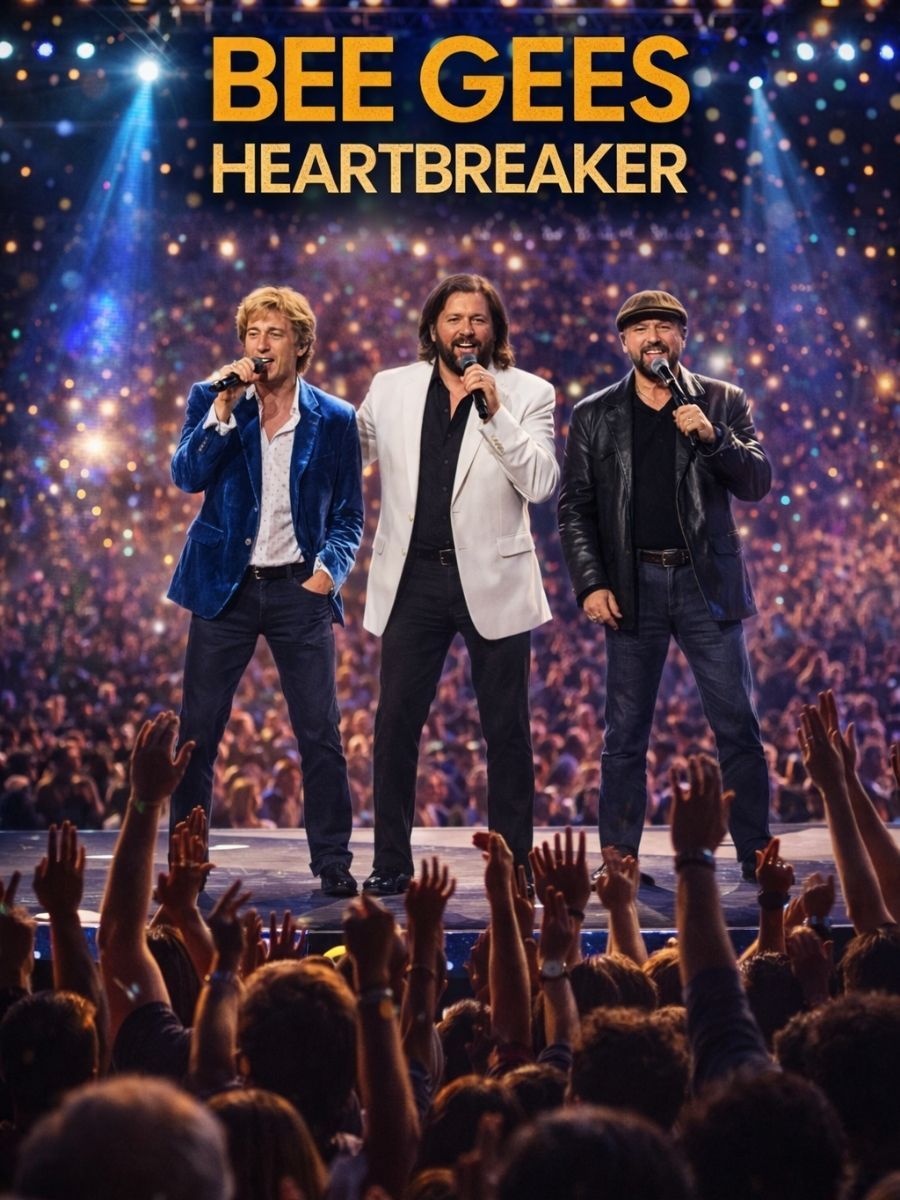
“Heartbreaker” — The Bee Gees’ Powerful Song of Love, Loss, and Emotional Strength
Among the emotionally charged songs connected to the songwriting legacy of the Bee Gees, the memorable ballad Heartbreaker stands as a powerful reflection on the fragile nature of love and the pain that can follow when trust is broken. Written by Barry Gibb, Robin Gibb, and Maurice Gibb, the song carries the emotional depth that became a hallmark of the Bee Gees’ songwriting.
Although widely associated with the Bee Gees, the song achieved global recognition when it was recorded by Dionne Warwick in 1982. The Bee Gees originally wrote the song specifically for her voice, recognizing that her soulful vocal style could deliver the emotional power embedded in the lyrics.
The composition itself is built around a strong melodic structure that gradually unfolds with emotional intensity. From the opening notes, the song establishes a reflective mood. The musical arrangement blends soft instrumentation with a steady rhythm, creating a space where the emotional message can resonate clearly.
Lyrically, “Heartbreaker” explores the experience of realizing that a relationship has reached a painful turning point. The narrator reflects on the moment when affection and trust begin to fade, leaving behind confusion and sorrow. Rather than focusing solely on heartbreak, the song also conveys a quiet resilience—the understanding that emotional strength must eventually replace disappointment.
This emotional complexity is part of what gives the song its lasting appeal. Many listeners recognize the feeling of confronting the end of a relationship while still holding onto memories that once felt meaningful.
The melody itself moves with graceful intensity. Each verse builds gradually toward a chorus that expresses the emotional weight of the story. The song’s structure allows the singer to move between vulnerability and strength, creating a powerful narrative through music.
When Dionne Warwick’s recording was released, it quickly became an international success. The single climbed high on the Billboard Hot 100 and received extensive radio play across the world. The song also demonstrated the extraordinary songwriting versatility of the Bee Gees, proving that their compositions could succeed not only in their own performances but also in the voices of other artists.
Over the decades, “Heartbreaker” has remained one of the most admired songs connected to the Bee Gees’ songwriting catalog. It stands as an example of their ability to craft melodies that carry both emotional depth and universal relatability.
For many listeners, the song represents more than just a story of heartbreak. It reflects the broader human experience of learning, growing, and finding strength even after disappointment.
Even today, when the melody begins, the emotional message remains as powerful as ever.
And within its haunting chorus lies a timeless reminder:
every heart that experiences loss also carries the quiet strength to begin again.