
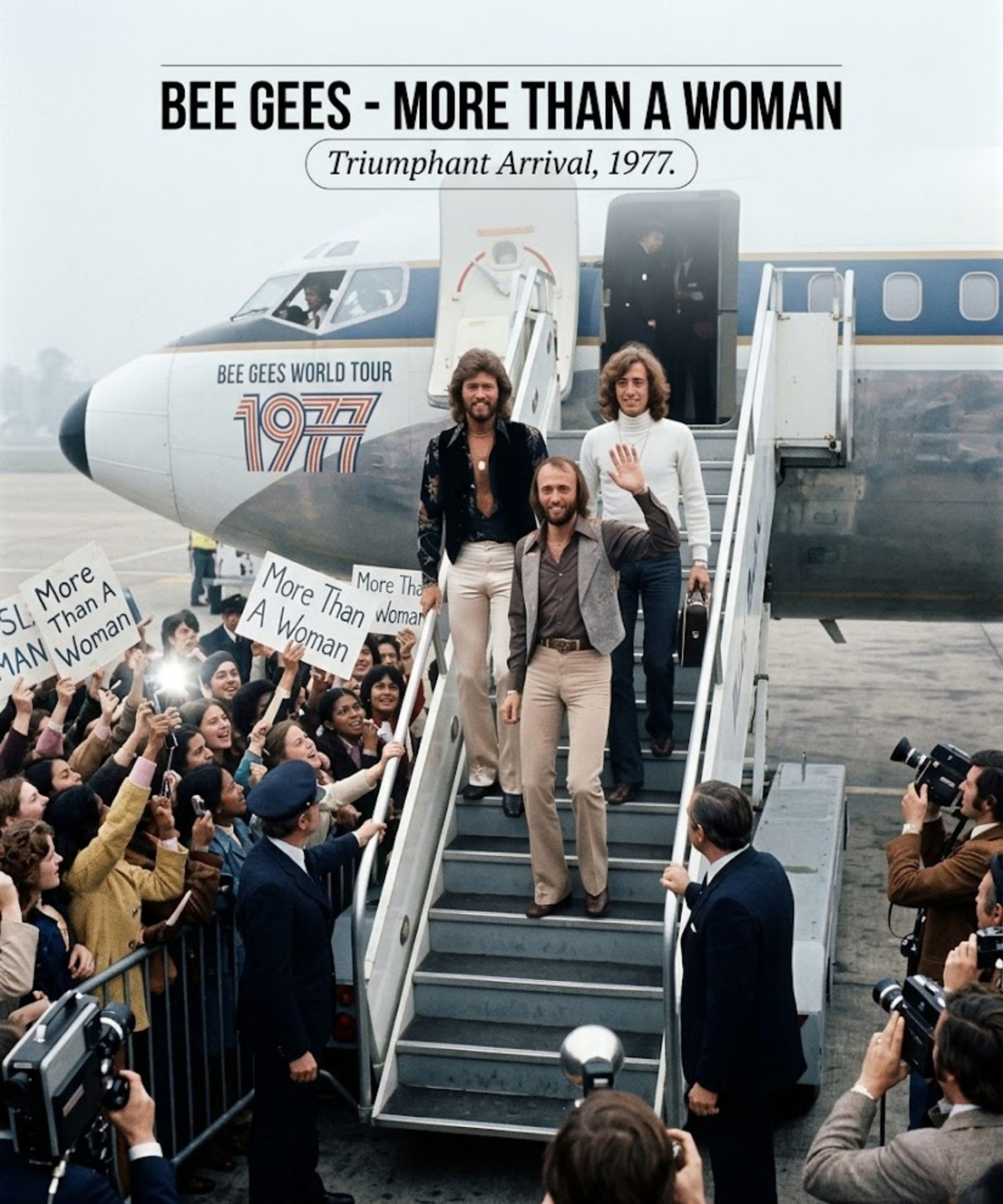
“More Than a Woman” — The Bee Gees Song That Captured the Soul of the Disco Era
Among the unforgettable songs created by the Bee Gees, the smooth and romantic track More Than a Woman remains one of the most iconic recordings of the late 1970s. Written by the Gibb brothers—Barry Gibb, Robin Gibb, and Maurice Gibb—the song became a defining piece of the era’s music and a key part of the cultural phenomenon surrounding disco.
Released in 1977 as part of the soundtrack for the influential film Saturday Night Fever, the song appeared during a time when the Bee Gees were reshaping the sound of popular music. The soundtrack album would go on to become one of the best-selling records in history, and “More Than a Woman” stood among its most memorable tracks.
The song opens with a rhythmic groove that immediately establishes its smooth disco atmosphere. The steady beat, accompanied by shimmering guitar lines and soft keyboard textures, creates a sound that feels both relaxed and deeply danceable. From the first moments, the track carries the signature elegance that distinguished the Bee Gees’ approach to disco music.
Barry Gibb’s falsetto voice leads the performance, delivering the melody with remarkable warmth and emotional clarity. His vocal style became one of the defining sounds of the era, combining technical precision with expressive feeling. Behind him, the harmonies of Robin and Maurice create the layered vocal texture that gave the Bee Gees their unmistakable identity.
Lyrically, “More Than a Woman” expresses admiration and devotion in a way that feels both romantic and sincere. The song speaks about a relationship that goes beyond simple attraction, emphasizing emotional connection and appreciation. This message helped the song resonate with listeners who connected with its theme of genuine affection.
Although the Bee Gees’ own recording became widely known, another version of the song also gained popularity. The group Tavares recorded their interpretation of “More Than a Woman” for the same film soundtrack, giving audiences two distinctive versions of the same composition.
Over time, the Bee Gees’ version has remained one of the most celebrated recordings from the Saturday Night Fever era. Its smooth melody and elegant arrangement showcase the group’s ability to combine rhythm with emotional depth.
Live performances of the song often became highlights of Bee Gees concerts. The steady groove and soaring vocals created an atmosphere of celebration, with audiences frequently singing along to the familiar chorus.
Decades later, “More Than a Woman” continues to appear in films, television programs, and retrospectives celebrating the music of the 1970s. The song’s timeless melody and romantic message ensure that it remains beloved by listeners across generations.
More than just a disco classic, the song represents the Bee Gees’ extraordinary ability to blend dance rhythms with heartfelt songwriting.
And every time its smooth rhythm returns, the song quietly reminds listeners that love, when deeply felt, can become something far greater than words alone can describe