
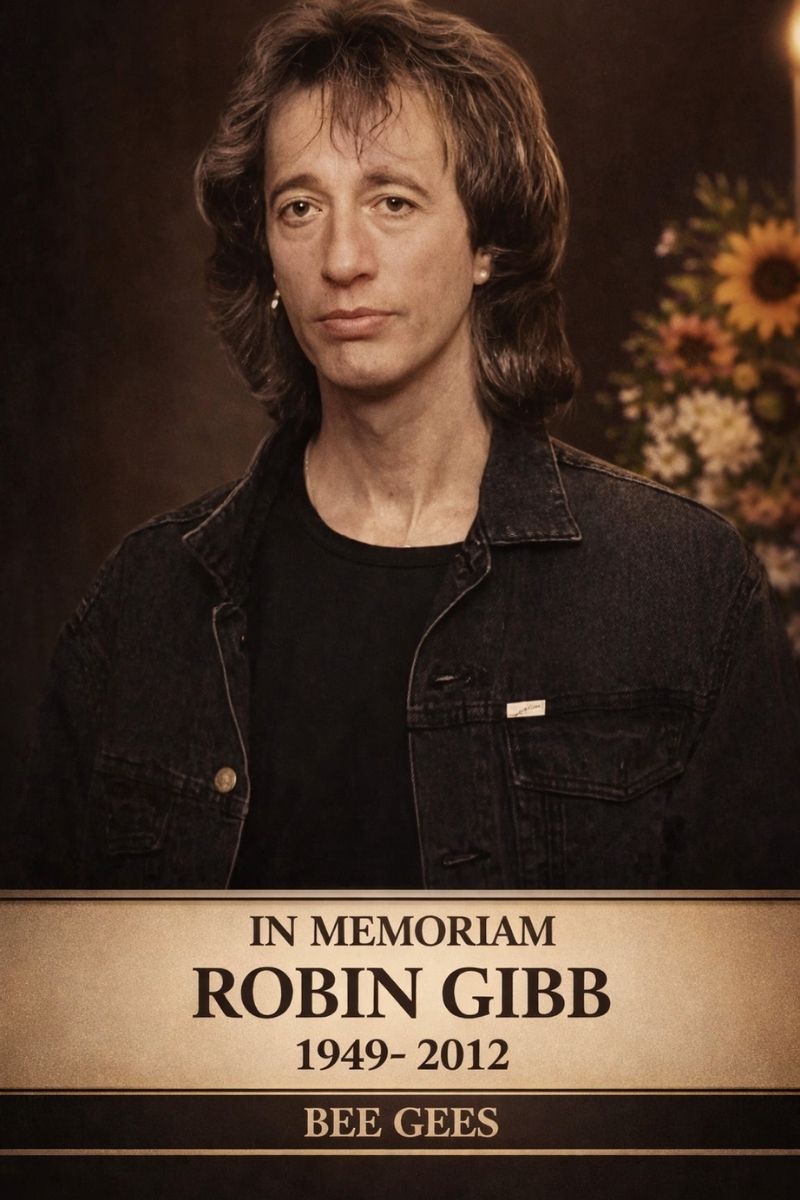
A Voice Time Could Not Silence — Remembering Robin Gibb (1949–2012), the Gentle Soul Behind the Harmony Whose Music Still Lives in the Hearts of Those Who Grew Old With His Songs
There are voices that command attention, and there are voices that stay. Robin Gibb’s belonged unmistakably to the latter. It did not announce itself with force. It arrived softly, almost cautiously, and then lingered—long after the final note had faded. For those who lived alongside his music, his voice became less a sound and more a presence, one that accompanied life’s quieter chapters with patience and grace.
Born in 1949, Robin Gibb grew up inside a world where harmony was not an arrangement but a family language. Alongside his brothers in the Bee Gees, he learned early that listening mattered as much as singing. His voice, often described as fragile or ethereal, carried a rare emotional clarity. It could ask questions without demanding answers. It could express longing without urgency. It trusted stillness.
What set Robin apart was not volume, but intent. His phrasing felt considered, reflective, and deeply human. When he sang, it was as if he were confiding rather than performing. Songs like “I Started a Joke,” “Massachusetts,” “New York Mining Disaster 1941,” and “How Can You Mend a Broken Heart” did not seek to impress. They sought to understand. In doing so, they found listeners who felt seen rather than entertained.
Robin’s presence within the Bee Gees’ harmonies was essential. Where other voices blended, his often hovered—slightly apart, unmistakable, emotionally charged. It gave the group’s sound its ache, its questioning edge. Harmony, in the Bee Gees’ hands, was never merely technical. It was relational. Robin’s voice carried the space between notes, the breath between thoughts. It made room for vulnerability.
As years passed and the audience aged, Robin’s songs aged with them. Lyrics once heard through youthful uncertainty later returned as companions to reflection. The same lines that once felt curious came to feel wise. His music did not lose relevance; it gained dimension. This is why so many listeners say they did not outgrow Robin Gibb’s songs. They grew into them.
Behind the scenes, Robin was known for his sensitivity and thoughtfulness. He approached music not as a product, but as a form of expression that required care. He valued meaning over immediacy, depth over trend. Even during periods of tension or separation, his commitment to the emotional truth of the music remained steady. Return, not rupture, defined his story.
When illness and loss entered the narrative, Robin faced them with the same quiet dignity that shaped his art. His passing in 2012 did not feel like an abrupt end so much as a profound silence—a space where a familiar presence had once been. For many, the absence was immediate and personal. It felt like losing a voice that had known how to sit with them during their own moments of uncertainty.
Yet time has shown that Robin Gibb’s voice was never truly silenced. It lives on in recordings that continue to feel intimate, in harmonies that still find their way into quiet rooms, late-night radios, and private reflection. It lives on in the way listeners recognize themselves in the questions his songs dared to ask.
For those who grew old with his music, remembering Robin is not an exercise in nostalgia. It is an acknowledgment of companionship. His songs were there during beginnings and endings, during hope and doubt. They did not rush past life. They walked beside it.
Today, when Robin’s voice rises from a familiar melody, it does not feel distant. It feels present. Time has not dimmed its clarity or softened its truth. Instead, it has revealed how deeply that voice was woven into the emotional lives of those who listened.
To remember Robin Gibb is to remember the power of gentleness. To remember that harmony is not only about blending, but about allowing space for feeling. His legacy is not measured by silence after his passing, but by the enduring way his music continues to speak—quietly, honestly, and with a tenderness that time could never take away.